
The Senate Appropriations Subcommittee on Education continued to advance a bill for a new state-funded scholarship program Tuesday
TALLAHASSEE -- In a 5-3 party-line vote, the Senate Appropriations Subcommittee on Education voted Tuesday to advance a bill that would eliminate the waiting list for the Florida Tax Credit Scholarship for lower-income families.
The bill, SB7070, creates the Family Empowerment Scholarship program, which would allow about 15,000 low-income students to attend the private school of their choice in 2019-20. Nearly 13,000 students are on the waiting list for Florida Tax Credit scholarships.
The legislation, which previously passed the Senate Education Committee on an identical party-line vote, includes other provisions related to a teacher bonus program and funding for social services at public schools. The bill's next stop is the full Appropriations Committee.
Sen. Dennis Baxley (R-Ocala) characterized the bill as “American” and “about freedom.”
“The empowerment of people making choices about their own life is tremendous,” Baxley said. “Most folks choose a traditional community school. This bill gives a tremendous push to traditional schools in addition to allowing choices for students who it’s not working for. If they’re not swimming, at least throw them the inner tube.”
Unlike the Florida Tax Credit Scholarship, which is funded with private donations from corporations that receive tax credits, the proposed Family Empowerment Scholarship program would be funded with tax dollars through the Florida Education Finance Program (FEFP).
Sen. Bill Montford (D-Tallahassee) cited that provision in opposing the bill.
“This is a fundamental change in public education in the state of Florida,” Montford said. “We have all kinds of choice programs, but when we tinker with FEFP, we’re going down the wrong path. I believe in choice, but we have to make decisions on when we stop paying for other peoples’ choices.”
Under the bill, the value of Florida Tax Credit scholarships would be 95 percent of the district average per-student funding in the FEFP. Like the Florida Tax Credit Scholarship, eligibility would be limited to students whose household income levels do not exceed 260 percent of the federal poverty level ($62,650 for a family of four). The program would be capped at 15,000 students its first year. That cap would increase with the annual growth of public school students in the state.
In a bipartisan vote last week, the House Education Committee passed its version of a bill that would eliminate the Florida Tax Credit waiting list. House PCB EDC 19-01, known as the Family Empowerment Scholarship, would help about 28,000 students in 2019-20. It sets a higher income limit for eligibility, opening it up to middle-class families.
Enrollment in the Florida Tax Credit Scholarship program dropped for the first time in 14 years in 2018-19, the result of slower growth in corporate contributions, according to the state Department of Revenue. (The program is administered by non-profits such as Step Up For Students, which hosts this blog.)
Demand for the scholarship remains strong. Parents of more than 170,000 students had started applications by the time Step Up For Students halted the application process in June because of the funding shortfall. Step Up already has awarded more than 88,000 scholarships for 2019-20, approximately 20,000 students ahead of last year.
Several parents spoke in support of the bill. Among them was Pierline Batiste of Miami, who implored lawmakers to end the waiting list, which her family has been on for about a year. She said her 13-year-old daughter Jeffryka has been bullied at her neighborhood school and she doesn’t want her son, Tyler, 6, to endure the same treatment.
“They bully her over everything. They don’t like her hair. They don’t like the way she dresses,” Batiste said. “When I drop her off at school, she gets stressed out, because all of these kids bother her for no reason. My son will go into first grade next year, and I don’t want him to deal with all that.”
Justice Frazier, a longtime former public school teacher now operating a private school with his wife, said the Florida Tax Credit Scholarship has provided peace of mind to frustrated parents and struggling students.
“Many students, when they get to my school, can’t face you, they won’t lift their eyes up,” he said. “They’re usually behind in math basics, they’re in seventh and eighth grade and they can’t tell you what 2 times 8 is. Parents are so grateful for the scholarship and they’re at their wits’ end.
“We have to do it right, make it safe and make a difference for the kids, emotionally, academically and socially.”
Pamela Schwartz, president of the Florida Retired Educators Association, was one of several speakers who opposed the bill. She said private schools don’t adhere to the same accountability and fiscal oversight standards as public schools, which she said lack funding and resources.
“You’re diverting funding from state public schools,” Schwartz said. “It’s a shame to give taxpayers’ money to schools that say they do a better job.”
Earlier Tuesday, Senate education leaders released a plan to increase education spending in 2019-20 by $1.1 billion, to $22.2 billion. That includes a $350 hike in per-pupil funding, to $7,779.
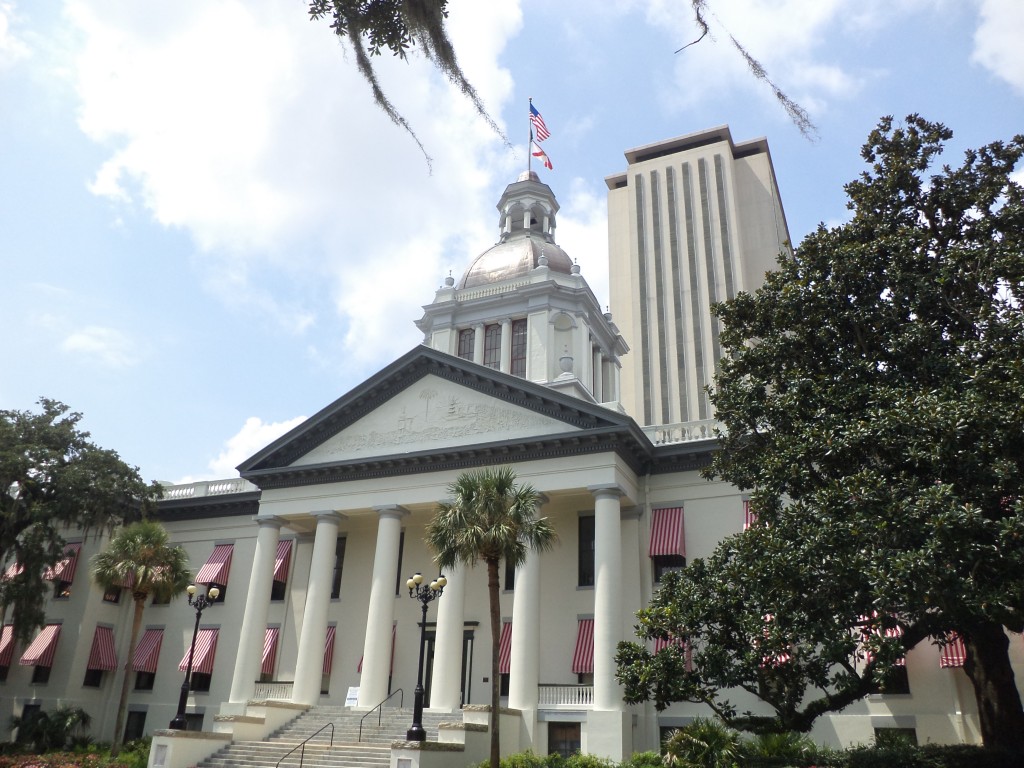
The first major education bill of the 2019 legislative session cleared committee Wednesday morning
TALLAHASSEE – In a 5-3 party-line vote, the Senate Education Committee on Wednesday approved a bill that would eliminate a waiting list for the Florida Tax Credit Scholarship for lower-income families.
The bill, SB 7070, creates the Family Empowerment Scholarship program. It includes other provisions related to a teacher bonus program and funding for social services at public schools.
“What we’re doing is trying to find common balance and make sure all students have the best education possible,” said committee chair Manny Diaz (R-Hialeah).
Diaz expressed concern that the definition of public education “keeps getting twisted.”
He added: “The reason we created public education in this country to begin with was because we had to have a populace that was educated and civic-minded that could be entrusted in continuing our republic. Our duty is to educate the children. Our duty is not to where they’re educated.”
Diaz said that philosophically, parts of the bill “bring us out of the 19th century” and allow parents to provide direction for each child.
Unlike the Florida Tax Credit Scholarship, which is funded with donations from corporations that receive tax credits, the proposed Family Empowerment Scholarship program would be funded through the Florida Education Finance Program (FEFP).
The value of the scholarships would be 95 percent of the district average per-student funding in the FEFP. Like the Florida Tax Credit Scholarship, eligibility would be limited to students whose household income levels do not exceed 260 percent of the federal poverty level ($62,650 for a family of four). The program would be capped at 15,000 students in 2019-20. That cap would increase with the annual growth of public school students in the state.
“This bill (allows) us to address the waiting list for tax credit scholarships for parents who want to make the (proper decisions) for their child but can’t because of the waiting list,” Diaz said.
Sen. Janet Cruz (D-Tampa) spoke against the measure, saying funding is being diverted away from public schools.
“The struggling traditional public schools need funding to improve,” she said.
Ninety percent (of Florida families) choose to attend public schools. Where is the funding for what they choose?”
Cruz added: “We don’t need a new voucher program. The (state) constitution says we have to provide for public education, which the Legislature ignores year after year. I will not support dismantling funding for the public school system, and I think this bill is just that.”
Sen. Kelli Stargel (R-Lakeland) disagreed, saying the bill will benefit parents, students and school districts.
“It doesn’t oppose public schools in any way,” she said, adding that the program would give parents the choices they need to put their children in the right educational environment.
Sen. David Simmons (R-Longwood) voted for the bill but expressed reservations about funding the new scholarship program through the FEFP, a concern shared by Sen. Bill Montford (D-Quincy), who opposed the bill. Simmons suggested wait-list families can be accommodated a different way.
“All we need to do is simply provide a credit,” he said. “Because there’s another $2.6 billion in taxes for which a credit can be given. All we need to do is say, ‘Certify that amount,’ and then that credit can be given.”
Several parents spoke in favor of the bill. Among them was Giselle Gomez of Ocala, a Realtor and single mother of Arturo Gomez III, 6, who currently is on the Florida Tax Credit Scholarship waiting list.
Gomez chose to pay out of pocket for Arturo to attend Redeemer Christian Academy, a private school, because she feared her son’s behavioral problems could not be properly addressed in a public school. While Arturo is happy and his behavior has improved at Redeemer, Gomez struggles to pay tuition.
“Being unable to make payments is embarrassing,” she said. “It makes me feel really bad as a mom.”
Gomez said that unlike many families who have the means to live near a neighborhood school that works for them, or who can afford a private school, she does not have those choices.
“I implore the Senate to end the waiting list so I and other moms don’t have to go through this,” she said. “A scholarship would make a world of difference to my son.”
Yahayra Marte, founder and administrator of Sunrise Academy in Orange City, told committee members it’s vital that the Legislature end the waiting list. Marte said she has waived tuition for 52 students and has reduced fees for 15 other waitlist students.
“That includes removing the requirement in the Senate bill that students on the current Florida Tax Credit Scholarship waiting list must have attended a public school in the prior year in order to qualify for the new scholarship program,” she said. “Otherwise, it won’t benefit my 67 waitlist students.”
Among the public speakers who criticized the bill was Sally Butzin, vice president of the League of Women Voters of Tallahassee, who said the new program would benefit only a “fortunate few” and divert money from public schools.
“I call this ‘education triage,’ ” Butzin said. “It’s a train bill, a take-it-or-leave-it, rather than (encouraging) debate. We oppose it, because it gives revenue for private and religious schools with no transparency, which is unconstitutional. It’s unconstitutional, undemocratic, flawed logic and diverts resources to benefit only a few children.”
Enrollment in the Florida Tax Credit Scholarship program dropped for the first time in 14 years in 2018-19. In the preceding 13 years, the average annual enrollment increase was 20 percent. The dip was due to slower growth in corporate contributions, according to the state Department of Revenue. (The program is administered by non-profits such as Step Up For Students, which hosts this blog.)
Demand for the scholarship remains strong. Parents of more than 170,000 students had started applications by the time Step Up For Students halted the application process in June. Step Up already has awarded more than 85,000 scholarships for 2019-20, approximately 20,000 students ahead of last year. New students are starting applications at a rate of more than 1,000 a day.
Gov. Ron DeSantis last month proposed a state-funded “Equal Opportunity Scholarship” to eliminate the Florida Tax Credit Scholarship waiting list. The House has yet to release its bill that addresses the problem.

