The lawsuit that challenges a scholarship program serving 70,000 low-income children in Florida heads to a Tallahassee courtroom this afternoon.
The issue before Leon Circuit Judge George Reynolds will not be the constitutionality of the Florida Tax Credit Scholarship itself.
Instead, the arguments will center on an important legal point that has stopped challenges to similar programs in other states: The question of whether the groups behind the lawsuit have standing to bring the case.
For that reason, today's hearing could be pivotal. Judging from the briefs filed by both sides and relevant cases in Florida and elsewhere, the arguments are likely to fall along two lines: Whether the plaintiffs – which includes the statewide teachers union and other groups – can show the program actually harms them, or whether they have standing to challenge the program simply as taxpayers.
Here are some of the key legal threads to keep an eye on.
Is this lawsuit similar to Bush v. Holmes?
Lawyers for the Florida Education Association and the other groups bringing the lawsuit have made clear that this is the terrain on which they want to fight.
Their core argument is that tax credit scholarships are no different from the school voucher program, called Opportunity Scholarships, that the state Supreme Court ruled unconstitutional in 2006. They underscored this point in their most recent legal filing late last month: "As explained in the complaint, the only substantive difference between the two programs is the mechanism through which funds are directed from the public fisc to private schools."
This goes to the heart of the union’s argument that the program harms public schools. In the 2006 decision, Bush v. Holmes, the justices found Opportunity Scholarships unconstitutional because the vouchers transferred “tax money earmarked for public education to private schools” — money that came “from each school district’s appropriated funds.”
The state’s lawyers argue the tax credit scholarships are different in legally important ways. As they write early in their motion to dismiss the case: “The program relies on private voluntary donations — not public dollars. And the program provides tax credits to donors — not schools or students.”

Sugarman
In 2002, in the Zelman case, the U.S. Supreme Court upheld the Cleveland school voucher program against a claim that the plan violates the “establishment clause” of the First Amendment to our national constitution. Simply put, the closely divided court concluded the Cleveland plan is part of a broader school choice scheme that in a number of ways gives families opportunities to select the schooling they believe is right for their children. That was understood to be the purpose and effect of the legislation and the fact that most of the vouchers were used at religious schools was beside the point. This decision shows a carefully constructed school voucher plan can survive a federal constitutional challenge.
Yet, voucher plans are still potentially illegal under state constitutional provisions that may be read by state courts to be more restrictive than the national constitution. States have very different provisions in their constitutions that voucher opponents cite in hopes of getting their state supreme courts to invalidate voucher plans. It is not possible to say what is the nationwide law on this issue because each state has its own separate constitution and because state supreme courts have in the past interpreted similar (or even identical) provisions of state constitutions in different ways.
This means that in every state where a school voucher plan is adopted there is likely to be a legal fight over its validity – as teachers’ unions, “separationists” who oppose anything they see as government aiding religion, and others who don’t like the voucher idea will go to court to try to win what they lost in the state legislature.
In March 2013, the Indiana Supreme Court, in the case of Meredith v. Pence, unanimously upheld the Indiana statewide school voucher plan against legal attacks in which opponents of the plan cited three different provisions of the Indiana state constitution. This was a big legal victory for supporters of the Indiana voucher plan, which at the time of the decision was serving about 9,000 students. (more…)
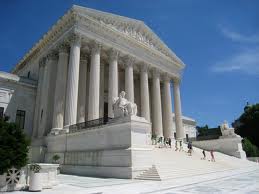 The Orlando Sentinel recently published a blog entry about a new website that opposes students using publicly-funded vouchers to attend private schools that teach creationism. The site asserts, “Teaching creationism with public money is unconstitutional. It violates the First Amendment of the U.S. Constitution which lays out a clear separation of church and state.”
I’m fine with citizens opposing the teaching of creationism. I would not send my child to a school that taught creationism in lieu of evolution, but the assertion that it’s unconstitutional is false.
In the 1925 Pierce v. Society of Sisters decision, the U.S. Supreme Court ruled parents are responsible for determining how and what their children are taught. And in the 2002 Zelman v. Simmons-Harris decision, the court ruled parents may use public money to pay for tuition at faith-based schools provided their choice is genuinely independent, and the funds go first to the parents and then to the school.
Florida’s school voucher programs all adhere to the Zelman requirement that funds go first to the parent and then the school, which is why using publicly-funded vouchers to attend faith-based schools is an exercise of the First Amendment’s freedom of religion clause, and not a violation of the Establishment Clause. (By the way, the term “separation of church and state” does not appear in the U.S. Constitution. That phrase was used by President Thomas Jefferson in a January 1, 1802 letter he wrote to the Danbury Baptist Association of Connecticut, reassuring them that he opposed the government interfering with their religious practices.)
The Sentinel wrote that some state officials think tax credit scholarships are more constitutional than vouchers because tax credit funds never touch the state treasury, but, again, the key to the Zelman decision is the path the funds travel to arrive at a faith-based school. Once public funds are given to the parents, they become less public and more private, which is why their expenditure is an exercise of religious freedom and not government-supported religion. (more…)
UPDATE: From The New York Times on the ruling: The Supreme Court on Monday effectively upheld an Arizona program that aids religious schools, saying in a 5-to-4 decision that the plaintiffs had no standing to challenge it. The program itself is novel and complicated, and allowing it to go forward may be of no particular moment. But by closing the courthouse door to some kinds of suits that claim violations of the First Amendment’s ban on government establishment of religion, the court’s ruling in the case may be quite consequential.
In a 5-4 ruling, the U.S. Supreme Court said that plaintiffs objecting to an Arizona tax credit scholarship on the grounds that it amounted to government aid of religious schooling have not been harmed by the program and therefore had no right to sue. The decision in Arizona Christian School Tuition Organization v. Winn overturns a ruling by the Ninth Circuit and is significant in the distinction it draws between direct governmental aid and tax credits for contributions to a cause.
We'll have more analyses later, but here are reports from Bloomberg and the ABA Journal, as well as an analysis from Andrew Coulson at the Cato Institute.

