 Desegregation complaint: The ACLU files an administrative complaint with the U.S. Department of Education Office for Civil Rights that accuses the Indian River County School District of not following the terms of a 1967 desegregation order. TCPalm.
School testing: State Education Commissioner Pam Stewart is not going along with the Florida Board of Education's wish to have Florida Standard Assessments test scores tied to NAEP proficiency levels. Gradebook. Standardized testing is a strain on learning time and a drain on school resources, Volusia County school officials say. WFTV.
Classroom size: The Broward County School Board is limiting the number of late-enrolling students teachers will be asked to handle. Sun-Sentinel.
Homeschool law: A homeschool support group in Manatee County says the death of Janiya Thomas was a tragedy, but says it is not a homeschool issue and doesn't believe the state needs to change its laws. Bradenton Herald.
School uniforms: The Volusia County School Board approves uniforms, starting in the 2016-2017 school year. Elementary, middle and high schools will have separate policies. Daytona Beach News-Journal.
Language labs: Central Florida students are being urged to master a second language, and schools are building language labs to help. Orlando Sentinel. (more…)
by Allison Hertog

Hertog
I have dedicated my life to helping disabled students – first as a special education teacher and, for the last many years, as an attorney for parents of disabled children. As strongly as I support the rights of disabled students to be educated on an equal playing field with their typical peers, I do not completely agree with the kind of heavy governmental oversight of private schools that the U.S. Department of Justice mandated last month in its much-publicized letter to the Wisconsin superintendent of public schools.
In that letter, the DOJ finds the State of Wisconsin is obligated to “eliminate discrimination” against students with disabilities in its private school voucher program, regardless of whether the private schools accept federal funds.
Because they take federal funds, states are of course charged with meeting certain federal civil rights mandates in their administration of public schools. I am not an expert in school choice law, or the Americans with Disabilities Act for that matter. But what appears to be new here is that because Wisconsin administers a school choice program, it must “ensure” that participating private schools, regardless of whether they take federal funds, adhere to some of the most important mandates of the ADA.
The private and religious status of the individual voucher schools does not absolve DPI of its obligation to assure that Wisconsin’s school choice programs do not discriminate against persons with disabilities as required under Title II [of the Americans with Disabilities Act.]
The letter was precipitated by a complaint filed in June 2011 by the American Civil Liberties Union and Disability Rights Wisconsin. It alleged the Milwaukee voucher program discriminates against kids with disabilities and segregates them in public schools. It claimed that of the 21,000 students enrolled in private voucher schools, 1.6 percent had plans that specified special needs services, compared to about 20 percent of students in the Milwaukee public school system. Voucher advocates such as Patrick Wolf, who completed a study in 2012, have found less discrepant rates of disability in the Milwaukee program.
An important note: Wisconsin’s voucher programs are not designed specifically to serve children with special needs, such as Florida’s John M. McKay Scholarship for Students with Disabilities. They are designed to serve all students with family incomes up to 300 percent above the poverty level.
Nonetheless, the result of the DOJ letter is the state must seriously ramp up its oversight of the private secular and religious schools participating in its voucher programs, including the Milwaukee Parental Choice Program, the oldest voucher program in the country.
Some oversight is, of course, warranted. In our country, private schools can’t discriminate against students based on their race for instance, regardless of whether the schools take government funds. And private schools which don’t take federal funds shouldn’t discriminate in their admissions and suspensions process against students who can meet the demands of the school if provided with reasonable accommodations and supports.
However, not all private entities in our society have a public purpose. Some private schools choose to forego the benefits of federal monies because they want to provide a certain type of education to a certain type of student population - be it a nunnery or a secular feeder high school to the Ivies. In the later case, even a private school which takes federal funds is totally within the confines of the ADA to discriminate against a child applicant with intellectual disabilities who cannot meet its academic demands. When a private school foregoes government money, it should not be subject to the same government oversight as a school which reaps the benefits of it. (more…)
Next steps. Florida should adopt parent triggers and education savings accounts to keep the reform momentum going, writes William Mattox at the James Madison Institute. Florida Voices.
 More on teacher raises. Gov. Rick Scott’s proposal is “long overdue,” writes the Miami Herald. Teachers deserve it, writes the Tampa Tribune. Agreed, writes the Florida Times Union. A "major leap in his new commitment to education," writes the Tallahassee Democrat. A good deal if it’s part of a long-term commitment, writes the Fort Myers News Press. A "naked political ploy," writes the Orlando Sentinel: "The best teacher in Florida will get the exact same raise as the worst teacher in Florida. We're having trouble seeing the merit in that."
It clashes with other items on the education wish list, notes StateImpact Florida. "A lot of details need to be worked out," writes Sunshine State News. A tradeoff for pension ruling? asks Education Week. State Rep. Kevin Rader, D-Boca Raton, has filed legislation for a constitutional amendment that would push teacher salaries to the national average, notes SchoolZone. Florida PTA likes the idea, SchoolZone also notes. Scott talks up his plan at Twin Lakes Elementary in Tampa, reports the Tampa Bay Times, and at Gainesville High, reports the Gainesville Sun.
Teacher evals. Gradebook: Work in progress, lawmakers say. StateImpact Florida: Districts have flexibility, a DOE official tells lawmakers. Associated Press: Race and poverty have little impact on evaluation scores, a DOE official tells lawmakers. SchoolZone: SB 736 may need some work, Gov. Scott says. Florida Times Union: A Duval middle school principal accidentally emails evaluation ratings to her entire staff.
Teacher quality. Gradebook logs in the NCTQ report that gives Florida a B- on teacher prep. So does the Associated Press.
School spending. An audit finds the Broward school district’s transportation department is missing about $1 million worth of equipment, including “two 2009 Ford Explorers worth $20,000 each, six generators worth $300,000, a forklift valued at $20,000 and 250 radios each priced at more than $1,000,” reports the South Florida Sun Sentinel. The Franklin County school district's financial crisis could mean 19.5 percent pay cuts for employees, reports the Tallahassee Democrat. (more…)

Bennett begins work today as Florida's new ed commissioner
Tony Bennett. The Orlando Sentinel hopes the new commissioner, who begins work today, “treads with discretion.” The Associated Press recalls his tenure in Indiana and ties to Jeb Bush.
Expand school choice now! Sort of. The Tampa Bay Times means options under district control: “The broader answer to improving public education in Pinellas is not a massive expansion of fundamental schools. It's raising the quality of all schools. But increasing the seats for fundamental schools and popular magnet programs to more closely match demand is a discussion district leaders should begin. Otherwise, they risk losing more families to charter schools and private schools — and further undermining broad support for public education.”
Slow down on charter schools. The Palm Beach Post says in one editorial that the Legislature should prioritize traditional public schools over charters. It says in another that the Palm Beach County district’s decision to transfer a troubled principal into administration will give lawmakers an excuse to continue favoring charters.
Checking out choice. In Alachua County, 600 middle school students turn out to see career academy options, reports the Gainesville Sun. In Duval, magnet students spread the word about their programs to prospective students, reports the Florida Times Union. In Miami-Dade, tens of thousands of parents are expected to apply for hundreds of magnet programs, reports the Miami-Herald. In Manatee, the Rock Your Robot Fair lets parents know about STEM options in public and private schools, reports the Bradenton Herald. (In Collier County, businesses urge students to explore STEM, reports the Naples Daily News.) The Tampa Bay Times annual school search section for Pinellas includes information about public and private options, including tax credit scholarships.
Amendment 8. The ACLU saw the proposed amendment, which despite perception had little to do with private school vouchers, as part of a "wide-ranging assault" on Floridians' rights last year by Gov. Rick Scott and the Republican-led Legislature, reports the Florida Current.
“Sagging schools.” Tampa Bay Times business columnist Robert Trigaux: “Beneath the top tier of students, our schools at all levels are struggling to educate our kids. Businesses need to help more. And the state needs to spend less time bragging about the educational system and admit it needs assistance.” (more…)
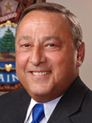
Gov. LePage
New Hampshire: The ACLU and Americans United for Separation of Church and State file suit against the state's new tax credit scholarship program (New Hampshire Public Radio). More from Associated Press.
Maine: State Education Commissioner Stephen Bowen points to problems in the process after the state charter school commission rejects four of five applicants (Bangor DailyNews). Gov. Paul LePage tees off on the commission and the teachers union after the rejections (Portland Press Herald). Supporters of virtual charter schools are also upset (Portland Press Herald). The teachers union blasts LePage for wanting to lift the cap on charter schools (Portland Press Herald). Public school administrators say charters should have to feel effect of education budget cuts too (Bangor Daily News).
Kansas: Vouchers, tax credit scholarships and an expansion of charter schools are all expected to be part of the legislative discussion this year (Wichita Eagle.)
Kentucky: A bill is filed to allow a limited number of charter schools to open in the state for the first time (Kentucky Public Radio).
California: Parents at Desert Trails Elementary School finally succeed in using the parent trigger law to get a charter school to take over their school (Los Angeles Times). More from Hechinger Report and Education Week.
Georgia: A state representative is planning to file a parent trigger bill for the session that begins today (Associated Press).
Mississippi: Business leaders are backing the legislative push for charter schools (Associated Press). Racial divisions and mistrust are at play in debate over charter schools (Hechinger Report). (more…)
Amendment 8 debate. Video at the Naples Daily News. Featuring Jim Towey, Ave Maria University president, and Howard Simon, Florida ACLU executive director. The Naples Daily News also runs this op-ed in favor of 8.
Drug-sniffing dogs. The U.S. Supreme Court considers arguments in two cases, including one in Florida, with potential implications for the use of drug-sniffing dogs in public schools, reports Education Week.
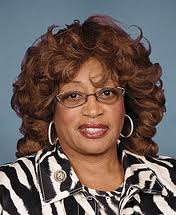
U.S. Rep. Brown
Request for investigation. U.S. Rep. Corrine Brown, D-Jacksonville, wants an investigation of online education provider K12, reports StateImpact Florida.
Online growth. Lake County appoints its first virtual school principal, reports the Orlando Sentinel.
Growth in tax credit scholarships. From redefinED (with speadsheet showing district-by-district growth over the past eight years). From Gradebook.
Vouchers and the Florida Supreme Court. Critics of the three justices up for a merit retention vote say their 2006 ruling on vouchers is evidence of liberal judicial activism, the Washington Post reports in a broader story about the campaign against the justices.
A judge in Colorado on Friday blocked the Douglas County school district's voucher experiment, insisting that allowing the program to move forward will lead to "real, immediate, and irreparable injury" to the plaintiffs and others who asked for the injunction.
Specifically, Judge Michael A. Martinez wrote in a 68-page ruling that the program provides aid to churches and faith-based schools and ignores safeguards that would ensure no public school funding would promote a participating school's "sectarian agenda." Further, Martinez said, there is "overwhelming evidence" to show that the voucher program violates Colorado's constitutional provisions which call for "uniform" funding of public education across the state.
Interestingly, Martinez wasn't persuaded by the ACLU's argument that the program also violated the constitutional demand for a thorough and uniform "system of free public education." A similar uniformity clause sunk the private school option in Florida's Opportunity Scholarship Program in 2006. Martinez, though, said the plaintiffs failed to show that the scholarship program prevented students "from otherwise obtaining a free public education in Douglas County."
Maddeningly, the judge acknowledged that the scholarship program "appears to be a well-intentioned effort to assist students in Douglas County," further stating that he agrees that the purpose of the school district was to help students and parents, "not sectarian institutions." The U.S. Supreme Court said the same when it came to a wholly different conclusion in the challenge to Cleveland's voucher program.
The Wall Street Journal hits the ground in Douglas County, Colo., with a report on the school district's pilot voucher program, highlighting that more affluent families will benefit from a policy that's largely targeted to more disadvantaged children in other states and municipalities. Also, The Denver Post gives readers a look at the last day of testimony in a court hearing that may decide whether the pilot program proceeds as the ACLU challenges its legality. Education News Colorado reports that Denver District Judge Michael A. Martinez will issue a ruling next week. Eddie has more at Ed is Watching.
This week, the Denver-based Legal Center for People with Disabilities and Older People filed a federal complaint alleging that a Colorado school district's pilot voucher plan discriminates against children with special needs. The voucher program would provide "only limited services (if any) for students with disabilities" and violates not only the Americans with Disabilities Act, but also Section 504 of the Rehabilitation Act protecting civil rights law, reads the complaint to the Justice Department. "Parents of students with disabilities do not have the same choice to participate in this program," the center states.
This, of course, comes just a month after the American Civil Liberties Union filed a similar complaint to the Justice Department alleging that the Milwaukee Parental Choice Program, and two schools in particular, also violate both ADA and Section 504 by discriminating against students with disabilities and further segregating Milwaukee students. "Proposed legislation to substantially expand the voucher program, if implemented, will exacerbate the discrimination against and segregation of students with disabilities by permitting more schools to participate in the program," the ACLU states.
The Milwaukee program did indeed expand to Racine, Wis., just as many private school options passed state legislatures during the past several months. Will we be seeing more complaints like these as one strategy to reverse the momentum?

