ABOUT THE AUTHOR
Doug Tuthill
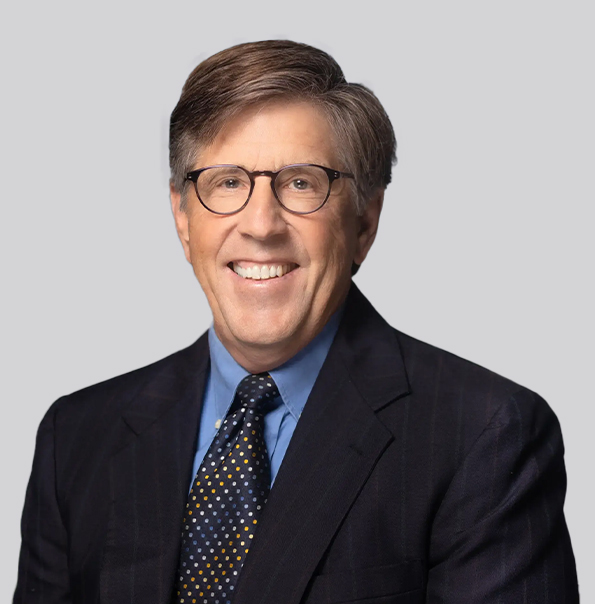
Doug Tuthill, a pivotal leader in educational innovation with over four decades of experience, expanded Step Up For Students from 9,000 to over 500,000 students as its President. Now serving as Chief Vision Officer, he continues to advocate for equitable educational opportunities through customized instruction. Doug's background as a teacher and union leader, combined with his dynamic public policy contributions, drives systemic change in public education.
My background story
Doug Tuthill is a nationally recognized leader in the field of educational innovation and education choice, with a career spanning more than four decades. As the President of Step Up For Students, a Florida nonprofit organization that administers state-approved scholarship programs, Doug has been at the forefront of providing equitable educational opportunities to millions of students. Under his leadership, Step Up For Students grew from serving 9,000 students to over 500,000 and has become the nation’s most impactful scholarship organizations. Doug recently stepped down as the Step Up President to assume the Chief Vision Officer position.
What I did before joining Step Up For Students
Doug began his career as a classroom teacher and teacher union leader, where he developed a deep commitment to improving student outcomes and addressing systemic inequalities. His passion for empowering families and communities through public education led him to become a leader in education reform and advocacy. Throughout his career, Doug has emphasized collaboration, innovation, and data-driven solutions to expand access to high-quality educational options.
What do I do on my day off?
A dynamic speaker and thought leader, Doug is a frequent contributor to national public policy discussions with a focus on public education’s current transition to more customized instruction. A transition Doug refers to as public education’s third era. His work has inspired educators, policymakers, and advocates to reimagine how public education can meet the diverse needs of every student.
Doug holds a master’s degree in education and has served on numerous boards and advisory councils dedicated to increasing equal opportunity in public education. His visionary leadership continues to transform the landscape of public education, helping ensure that all children have the opportunity to thrive.
How to reach out?
Doug can be reached at dtuthill@sufs.org.
05/08/25 | Doug Tuthill
The systemic improvements public education needs are coming
Student achievement has fallen to its worst levels in two decades. Throughout public education, we see blaring sirens that our students deserve better. At the same time, states across the...
READ MORE
01/25/25 | Doug Tuthill
ESAs and transactional friction in public education’s third era
In its third era, public education aspires to expand equal opportunity by helping families and educators provide every student with an effective and efficient customized education through an effective and...
READ MORE
12/23/24 | Doug Tuthill
The third era of public education
Public education in the United States is transitioning from its second to third paradigm. Paradigm shifts in public education occur when larger societal changes force public education to change to...
READ MORE
11/06/24 | Doug Tuthill
Trust but verify is key to scaling parental empowerment and customized instruction in public education
For the past 175 years, U.S. public education has been a government monopoly utilizing a one-size-fits-all approach to educating students. Educators know each student is unique, and many are poorly...
READ MORE
09/16/24 | Doug Tuthill
Social engineering, ESAs, and the public education market
Governments engage in social engineering when they create policies and programs to influence (i.e., govern) their citizens’ behavior. All governing, including public education, is an act of social engineering. How...
READ MORE
09/11/24 | Doug Tuthill
Public education is transitioning from its second to third paradigm
Public education is in the early stages of transitioning from its second to third paradigm. In his 1962 book, The Structure of Scientific Revolutions, Thomas Kuhn described an organization’s paradigm...
READ MORE
09/04/24 | Doug Tuthill
Education choice helps improve our civic culture
Education choice critics often assert that allowing families to choose the best learning environments for their children undermines our civic culture. They say our democracy is strengthened when children...
READ MORE
08/28/24 | Doug Tuthill
Tribal politics, education choice, and the Constitution
As our country was being formed, states such as Connecticut, Georgia, Maryland, Massachusetts, New Hampshire, South Carolina, and Virginia adopted state religions that citizens were taxed to fund and expected...
READ MORE
08/23/24 | Doug Tuthill
Legendary ed choice advocate Jack Coons celebrates a milestone
Editor’s note: Our friend, John E.Coons, has been a regular contributor over the years to Step Up For Students policy blogs. Shortly after the 2021 release of his latest book,...
READ MORE
08/19/24 | Doug Tuthill
From school districts to education districts
The expanding number of states making flexible spending accounts (ESAs) accessible to their public education students is accelerating the transition from school choice to education choice as families spend their...
READ MORE
07/17/24 | Doug Tuthill
Polly Williams’ and Milton Friedman’s approaches to education choice are merging
Milton Friedman first proposed giving families control of their children’s public education dollars in his 1955 essay “The Role of Government in Education.” Friedman argued that the best way to...
READ MORE
07/11/24 | Doug Tuthill
Low-income students benefit when states give all students access to ESAs
In the spring of 2023, the Florida Legislature and governor made ESAs accessible to all K-12 students. (Accessible means the state government provided funding for the number of students it...
READ MORE
04/22/24 | Doug Tuthill
Education Choice and Learning by Doing
After we finished recording an interview about homeschool families using state funds to pay for educational activities at Florida theme parks, a TV reporter told me her most interesting day...
READ MORE
04/15/24 | Doug Tuthill
U.S. public education became more diverse and inclusive in 1925
The Ku Klux Klan helped pass an amendment to the Oregon constitution in 1922 requiring that all students attend Protestant-controlled schools operated by local governments. The primary target of this...
READ MORE
02/06/24 | Doug Tuthill
The transition to the third era of US public education has begun
U.S. public education has had three primary eras. The first era reflected the needs of a sparsely populated rural agrarian society. Most children were homeschooled and literacy focused primarily on...
READ MORE
03/20/23 | Doug Tuthill
podcastED: Step Up For Students President Doug Tuthill talks with New Hampshire education choice pioneer Kate Baker Demers
On this episode, Tuthill interviews Demers, who started the Children’s Scholarship Fund in New Hampshire, and has worked tirelessly as its executive director for the establishment of a tax credit...
READ MORE
06/21/22 | Doug Tuthill
SUFS president Doug Tuthill on new DeVos book, how the former education secretary exhibits grace under pressure
Former US Secretary of Education Betsy DeVos released a new book today called Hostages No More: The Fight for Education Freedom and the Future of the American Child. I’ve read...
READ MORE
01/27/22 | Doug Tuthill
National teacher union leader wants to have a different conversation. Me too.
Editor’s note: This commentary from Step Up For Students president Doug Tuthill explores why education choice advocates are working hard to improve public education. The education news site, The 74,...
READ MORE
11/10/21 | Doug Tuthill
Word for word: SUFS president on expansion of education choice in Florida
Editor’s note: Step Up For Students president Doug Tuthill appeared last week before the Florida House of Representatives’ Pre-K – 12 Education Appropriations Subcommittee to answer questions about how state...
READ MORE
04/26/21 | Doug Tuthill
Florida Legislature is normalizing, expanding access to education choice
The Florida House and Senate have sent Gov. Ron DeSantis legislation that will continue normalizing and expanding access to choice in public education. Florida began expanding access to education choice...
READ MORE